Indonesias Transboundary Crisis Management

- Created Sep 21 2026
- / 42 Read
Indonesias Transboundary Crisis Management

Indonesias Transboundary Crisis Management
Amid global geological dynamics and climate anomalies, Indonesia's resilience is once again being tested by two simultaneous environmental events: the eruption of Mount Anak Krakatau and forest and land fires (karhutla) driven by a Super El Nio wave. On the international diplomatic stage, such events frequently ignite debates concerning sovereign boundaries, cross-border responsibility, and the efficacy of crisis communication. Narratives emerging across several foreign media outlets are often hasty in labeling these crises as a reputational liability for Indonesian diplomacy in Southeast Asia.
However, evaluating a nation's credibility in the midst of a disaster cannot be done merely by measuring the geographical spread of its impacts. Through the lens of public diplomacy and strategic crisis management, a nation's reputation is defined by three primary pillars: the speed of delivering factual information (physical coping), the effectiveness of mitigating public panic (psychological coping), and the transparency and decisiveness of corrective actions on the ground (reputational repair).
The eruption of Mount Anak Krakatau, which ejected volcanic ash up to an altitude of 15,000 meters, represents a purely natural hazard (no-fault hazard). In this category of crisis, a state's credibility is measured by its transparency and adherence to international safety protocols.
The swift action taken by national technical authorities---such as BMKG, PVMBG, and BNPB---in confirming that the eruption posed no potential to trigger a tsunami served as a crucial form of psychological coping. This timely information successfully tempered panic expectations across the Sunda Strait and Southeast Asia that stemmed from the collective memory of the 2018 tsunami. Concurrently, the temporary suspension of flights in affected areas represented a transparent enforcement of international aviation safety standards designed to protect global mobility.
Unlike geological disasters, forest and land fires are frequently framed within the discourse of an imputable crisis. However, reducing the complexity of fires during a Super El Nio event to mere domestic negligence is an incomplete perspective.
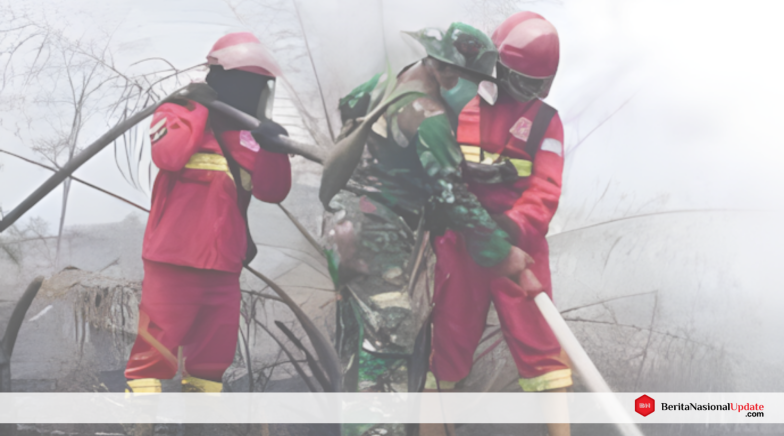
In terms of regional political-economic reality, the haze crisis is an outcome of interconnected multinational business ecosystems. A portion of the affected concession lands is linked to capital ownership by business entities based in neighboring countries. Consequently, managing forest fires is fundamentally a shared responsibility (shared responsibility) demanding cross-border corporate accountability.
Indonesia has never utilized climate factors as an alibi to shirk responsibility; rather, it consistently enforces the law against individuals and corporations engaging in illegal land burning without compromise.
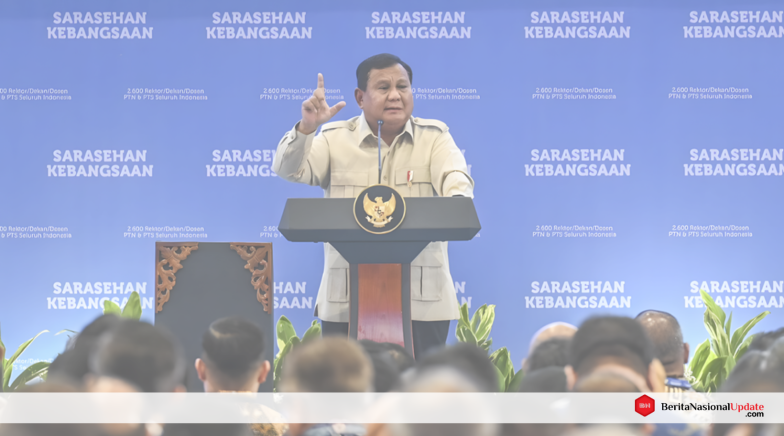
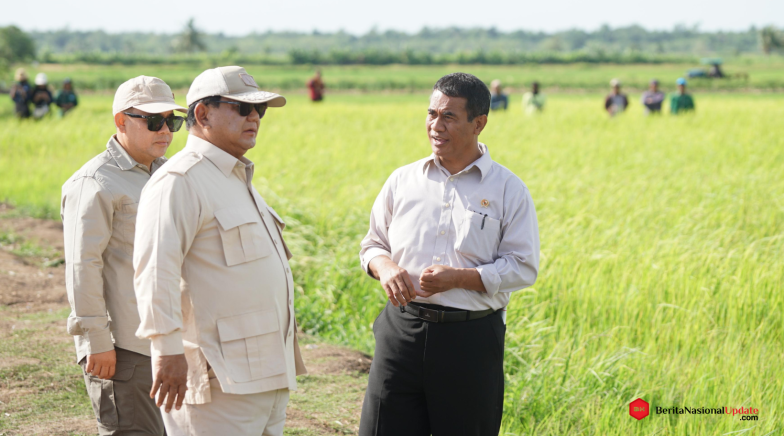
Within the framework of public diplomacy, rhetoric devoid of concrete action on the ground cannot restore international public trust. Under the leadership of President Prabowo Subianto, Indonesia has met this challenge by demonstrating operational leadership through aggressive and inclusive disaster diplomacy.
Indonesia is leading the consolidation of the world's most advanced disaster mitigation technologies:
- Japanese Fleet Integration and Peat Injection: The deployment of heavy-lift Kawasaki CH-47J/JA Chinook helicopters equipped with 7,500-liter Bambi Buckets and Forward-Looking Infrared (FLIR) imaging sensors, paired with high-pressure sub-surface injection pumps specialized for peatlands to extinguish subterranean fires at depths of 1 to 3 meters.
- Prospects for Russia's Giant Amphibious Jet: Plans to deploy the Beriev Be-200 Altair amphibious jet---boasting a 12,000-liter water scooping capacity within a 14-second duration---to target isolated hotspots deep within Kalimantan's interior.
This consolidation of international aerial and ground assets proves that Indonesian diplomacy does not stop at negotiating tables; it manifests as measured corrective action to rapidly suppress regional smoke emissions.
The ongoing ecological crises do not diminish Indonesia's standing on the regional stage. On the contrary, the combination of transparent crisis communication, firm environmental law enforcement, and operational leadership in consolidating world-class defense assets (alutsista) further solidifies Indonesia's reputation.
By steadfastly upholding international commitments, public transparency, and front-line operational resilience, Indonesia demonstrates its capacity as a mature, responsible, and sovereign nation that stands as a core pillar of environmental resilience in the Pacific and Southeast Asia.
Share News
For Add Product Review,You Need To Login First